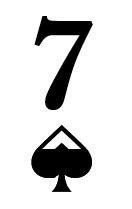
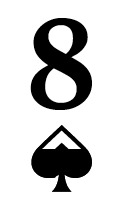
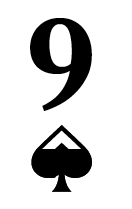
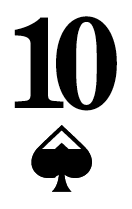
This is a 54-card Tarok deck. Tarok is not one game but a whole family of games.
Alpine Tarok, composition
Suits
Hearts, Diamonds, Spades, Clubs
Cards per suit
8
Court ranks
Jack, Cavalier, Queen, King
Trumps
I to XXI, plus the Skus
Card count
54
Hearts8 cards
Diamonds8 cards
Spades8 cards
Clubs8 cards
Taroks22 cards
Start with these six games
The pips, the arrows and the animals let a new player read each card's rank and worth from the card itself, so we recommend this deck for teaching these games.
The deck has 5 suits: the four classic French suits, Clubs, Spades, Hearts and Diamonds, and the Tarok suit.
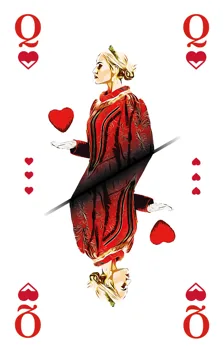
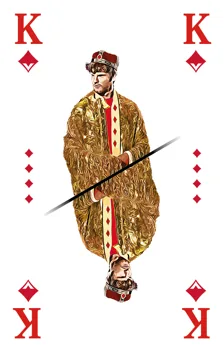
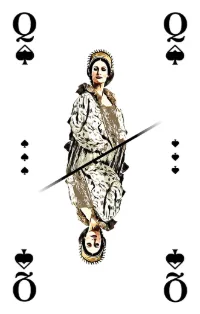
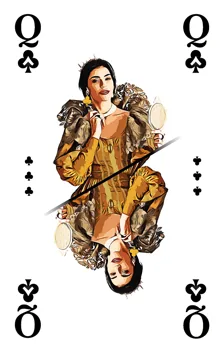
In tables and examples, cards are written the way the deck prints them: Q is the Queen of Spades, 1 the 1 of Hearts, and the Taroks go by their Roman numerals, so the XVIII is Tarok eighteen.
The Standard Suits
We start with the four color suits. Each color suit has only 8 cards: 4 face cards and 4 number cards.
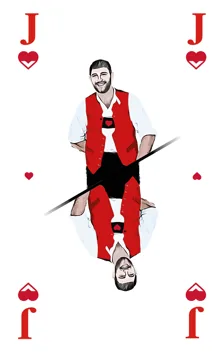
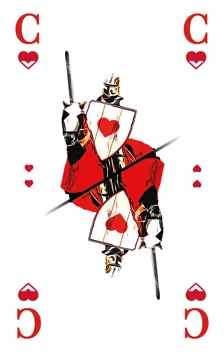
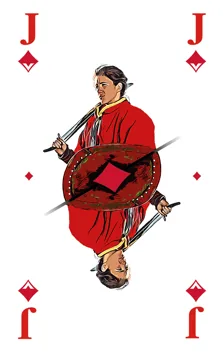
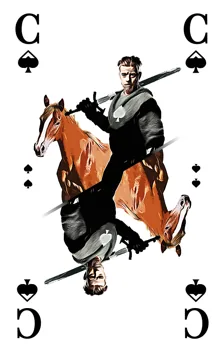
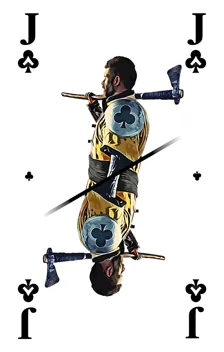
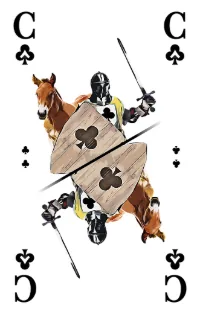
Besides the Jack, the Queen and the King, Tarok has a fourth face card: the Cavalier. It ranks between the Queen and the Jack.
The four Cavaliers: a horse and the letter C in the index
You recognize a Cavalier by the horse and the letter C in its index.
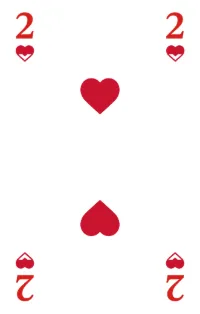
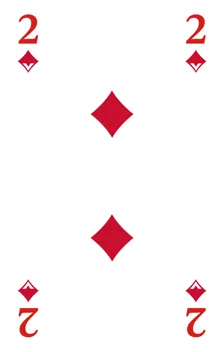
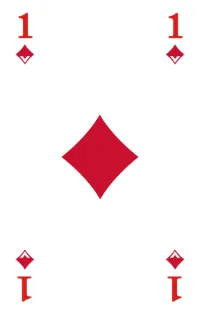
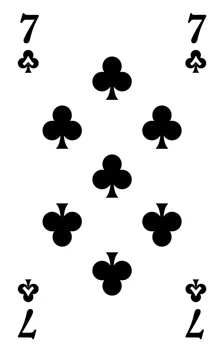
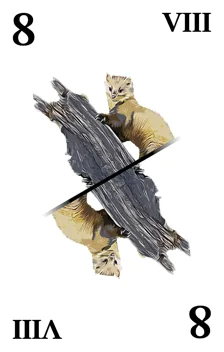
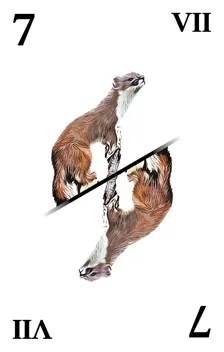
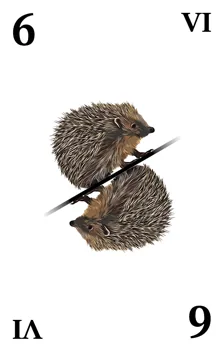
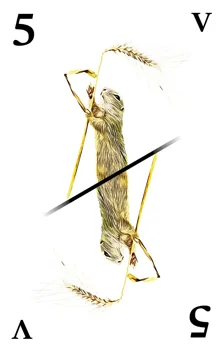
Each suit also has only 4 number cards, and the red suits and the black suits have different ones:
Suits
Number cards
Red suits (Hearts and Diamonds)
1, 2, 3 and 4
Black suits (Clubs and Spades)
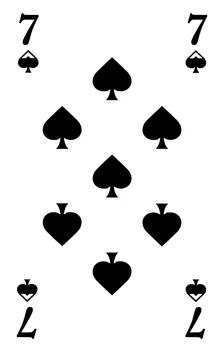
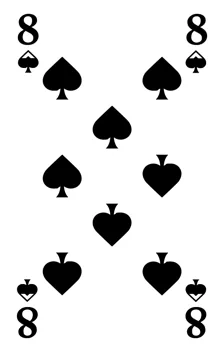
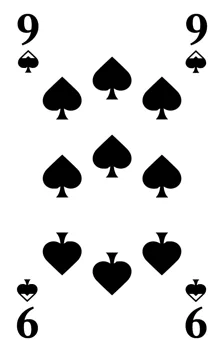
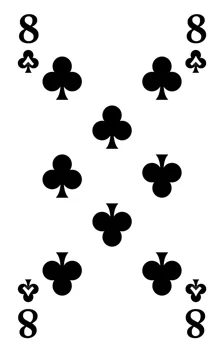
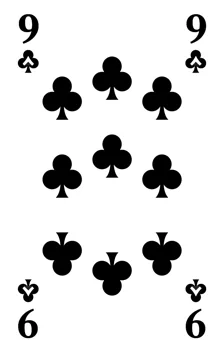
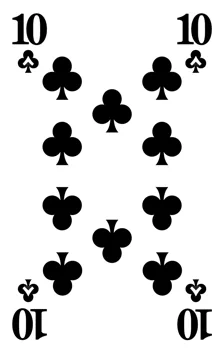
7, 8, 9 and 10
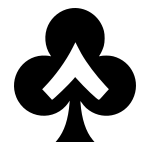
The number cards also rank in a different order in the red suits and in the black suits. The pips (the small suit symbols printed on each card) have small arrows that show the order, and the “Ranking” section of this page explains both orders.
Hearts
lowest rankhighest rank
Spades
lowest rankhighest rank
Red suits count 1–4, black suits 7–10
The Tarok Suit
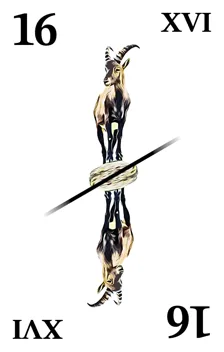
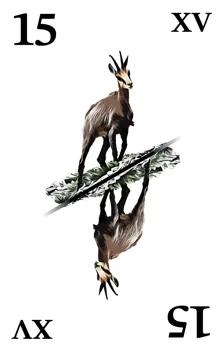
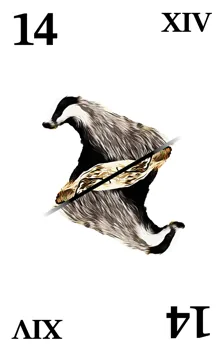
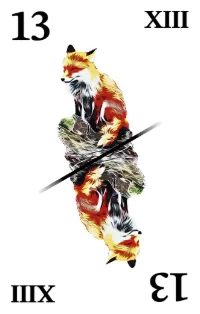
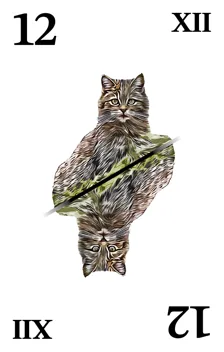
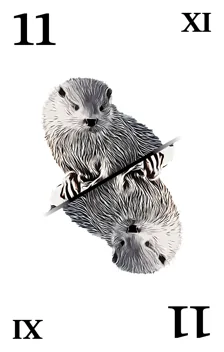
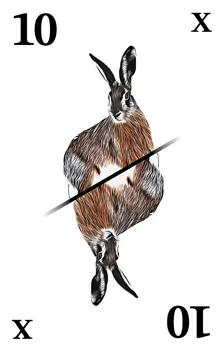
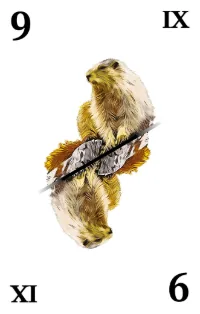
The Taroks are numbered with Roman numerals, and each of them shows an animal of the Alps. The higher the Tarok, the higher its animal stands in the natural hierarchy: the wolf (XX) ranks far above the hare (X). This helps you see a card’s ranking at a glance. The Tarok suit has 21 numbered cards, plus one extra card with star indices.
The 21 numbered Taroks, from I to XXI
Some cards in the Tarok suit carry names and belong to named sets. Here they are:
Tarok
Name
Represented by
Set
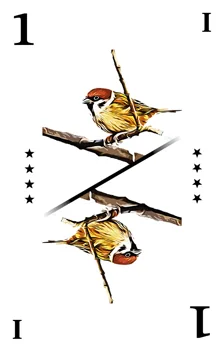
I
Pagat
Sparrow
the Birds, the Trull
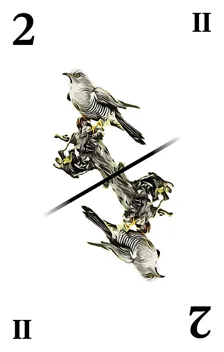
II
Cuckoo
the Birds
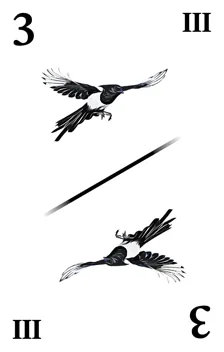
III
Magpie
the Birds
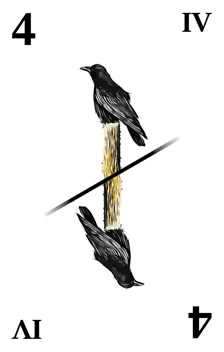
IV
Raven
the Birds
XXI
Moon
Brown Bear
the Trull
Skus
Edelweiss
the Trull
The first four Taroks, I to IV, are called the Birds.
The Pagat is Tarok I
The Birds matter in play: several games have bonuses for exactly these cards. You will meet these bonuses in the rules of the individual games.
Cuckoo, Magpie, Raven: together with the Pagat, they are the Birds
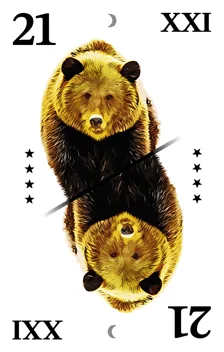
The highest numbered Tarok is the XXI, called the Moon (note the small moon on the card). Its Brown Bear is the highest animal in the deck. The name comes from a confusion of words: the French le monde, the world, was taken for the German Mond, the moon. It is common for the XXI of a Tarok deck to carry a small moon.
The Moon is Tarok XXI
The highest-ranking card of the Tarok suit is the Skus (Sküs in German, škis in Slovenian, Skíz in Hungarian; the name comes from the French Excuse). It is the most powerful card in the deck and beats every other card, with one exception that Core Concepts explains. Its Edelweiss is a flower of the Alps.
The Skus is the most powerful card in the deck
The second named set is the Trull: the Pagat, the Moon and the Skus. Several bonuses in the rules of the individual games are about these three cards.
The Trull: Pagat (I) · Moon (XXI) · Skus
Ranking and Card Values
Every card has two properties:
The first is the card’s ranking: whether it wins or loses a trick against other cards.
The second is the card’s worth: the Card Points a player gains by capturing that card in a trick.
Ranking
A Tarok beats any card of a color suit. Within the Tarok suit, the higher the Roman numeral, the stronger the card. The Skus () is the strongest Tarok and beats all the others.
In the color suits, the black suits and the red suits rank their number cards in different orders:
Suits
Ranking, ascending
Clubs and Spades
7, 8, 9, 10, Jack, Cavalier, Queen, King
Hearts and Diamonds
4, 3, 2, 1, Jack, Cavalier, Queen, King
Spades & Clubs rank in this order
Example: the 10 beats the 7 but is beaten by the K.
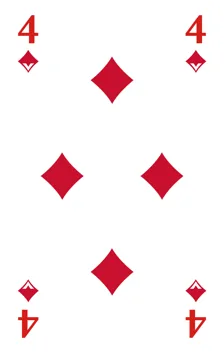
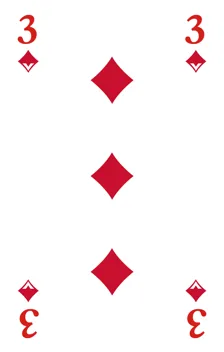
In Hearts and Diamonds the number cards rank the other way round: the 1 is the highest number card and the 4 is the lowest. This is the hard part of the ranking, so take a moment to remember it.
Hearts & Diamonds: among the number cards, the 1 is highest
Example: the 2 beats the 4 but is beaten by the Q.
The deck helps you with the two orders: the small arrows in the pips show which way the number cards rank.
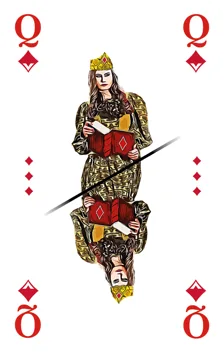
The courts rank alike in all four suits, above the number cards: Jack, Cavalier, Queen, King, ascending.
Hearts
1 2 3 4
Diamonds
1 2 3 4
Spades
10 9 8 7
Clubs
10 9 8 7
Among the number cards the 1 is highest in Hearts and Diamonds, and the 10 is highest in Spades and Clubs. Each ladder runs from the suit’s highest number card down to its lowest, and the arrow points at the lowest.
Card Values
A card’s worth counts at the end of every hand, when the players count the cards they captured. The most valuable cards show their worth: count the small pips printed on their sides.
Pips
Cards
4 pips
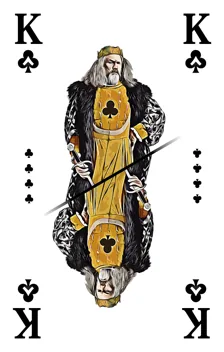
Kings, and the Trull: Pagat (I), Moon (XXI), Skus
3 pips
Queens
2 pips
Cavaliers
1 pip
Jacks
none
All other cards (number cards, Taroks II–XX) carry no value pips
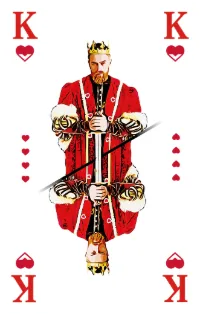
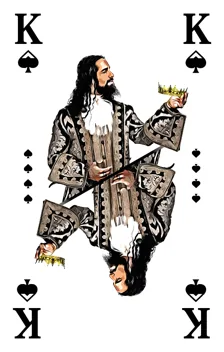
The King, the Queen, the Cavalier and the Jack show 4, 3, 2 and 1 pips on their sides
Have a look at your cards: the King shows 4 pips, the Queen 3, and the Trull cards each carry 4 star pips.
Rank and pips do different jobs. A card’s rank decides who wins the trick. Its pips decide how much extra the card is worth to the player who captures it.
Each game counts the captured cards in its own way and then adds the pips. Each game’s rules explain its count with a worked example.
There are two kinds of points. Card Points win the hand, and Victory Points win the evening. Every contract and every bonus is scored in Victory Points, and the score sheet keeps count of them. You score Victory Points by delivering the contract you chose, and through bonuses, which almost any player can score. Core Concepts explains both kinds of points.
The deck has one more design choice: every card face stands on a clean white background, so that you can read a card from across the table. We tested this in play by counting how often players leaned forward to read a card.
Your guided first gameReady to play: the Alpine Tarok deck ships presorted for your guided first game. Start the guided first game
About the designer
The Alpine Tarok deck was designed by Greg Lichtensteiner of Elsteiner Games as a modern take on the traditional Tarok deck, with a focus on ease of use. Greg is Austrian-American. When he wanted to take his Tarok games with him, he found them harder to explain than they need to be. So he put player aids and mnemonic devices on the cards themselves: the pips show how many Card Points a card is worth, small arrows show which way the number cards rank, and the animals on the Taroks rise with the rank of the card. They are there to make the games easier to teach.
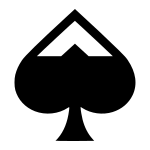
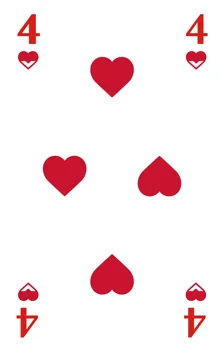
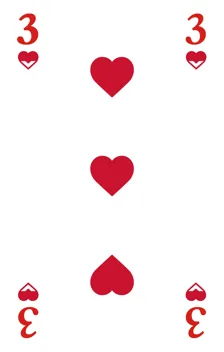
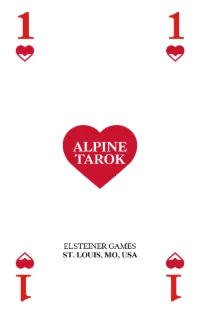



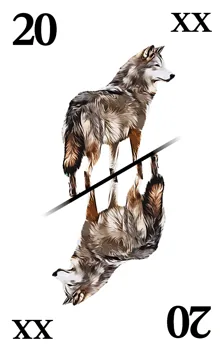
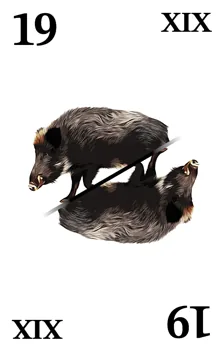
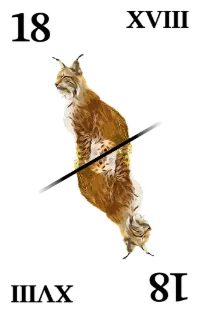
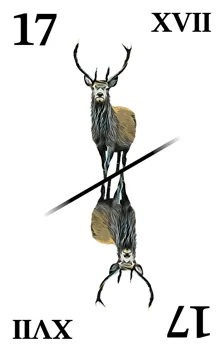


 is the Queen of Spades, 1
 the 1 of Hearts, and the Taroks go by their Roman numerals, so the XVIII is Tarok eighteen.