The Cards
Hungarian Tarokk plays with the 42-card deck: set aside the 2, 3 and 4 of Hearts and Diamonds and the 7, 8 and 9 of Clubs and Spades, and keep all 22 Taroks, the Birds included. What remains is five cards per color suit (King, Queen, Cavalier, Jack, and the red 1s or the black 10s) plus the full Tarok suit.
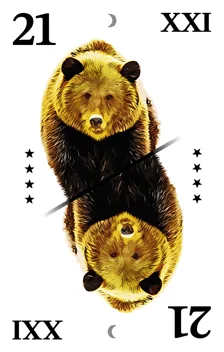
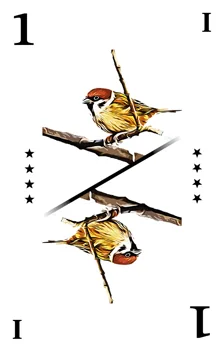
Three cards have their own name in this game, the honours (the trio you know as the Trull): the Skus (Skíz), the XXI and the Pagat (Pagát). The bidding rules use this word.

The Preparation
Four players sit around the table, play runs counter-clockwise, and the Forehand sits to the Dealer’s right. The player to the Dealer’s left cuts. The Dealer lays the first six cards face-down in the middle as the talon, straight off the top, then deals nine cards to each player (nine tricks per hand). The deal passes to the right. Five can play: the Dealer deals for the other four, sits the hand out, and never scores.
 P1
Forehand
P2
P3
cuts
P4
Dealer
The Bidding
The bidding works as taught under Bidding in Core Concepts, on the ladder below. Every contract in these rules is a called-partner contract, named for how many talon cards the Declarer will take, and the fewer talon cards the Declarer takes, the more the contract is worth. Bidding starts with the Forehand and runs counter-clockwise.
The honour requirement. You may not bid unless you hold at least one honour (Skus, XXI or Pagat). There is one exception, the trial Three (próbahárom): if the first three players all pass, the fourth player alone may bid Three without an honour. If the fourth player passes too, the cards are thrown in, and the deal passes to the right. These rules teach this simpler table version; the Expansions give the traditional rule, in which the next four deals score double.
The trial Three ends the bidding at once, and the fourth player takes the three talon cards, hoping for an honour:
| The three talon cards | What happens |
|---|---|
| They bring an honour. | The hand goes on as any Three. |
| They bring no honour. | Play stops, and each opponent adds the value of the contract, 1 Victory Point. |
Standing. The family standing right (see Standing in Core Concepts) plays here too. Hungarian Tarokk adds two conditions of its own. First, you may stand only if you have already bid in this hand. Second, a bid can be stood on only once. Beyond that, stand as often as new bids appear. Players say “I hold” (tartom in Hungarian).
The Contracts
The contracts and bonuses in these rules are a basic set. No two groups play Hungarian Tarokk exactly alike, and you are meant to build on this set. The Expansions list more rules and conventions. They have more ideas, and the beginner score sheet has blank lines for the contracts and announcements you want to add.
| Contract | VP | Leads | Talon |
|---|---|---|---|
| Three Három |
1 | Forehand | 3 |
| You call a secret Partner and take three talon cards. | |||
| Two Kettő |
2 | Forehand | 2 |
| You call a secret Partner and take two talon cards. | |||
| One Egy |
3 | Forehand | 1 |
| You call a secret Partner and take one talon card. | |||
| Solo Szóló |
4 | Forehand | 0 |
| You call a secret Partner too, but you take no talon card, and the other three players share the whole talon. | |||
In the Talon column, a number is how many talon cards the Declarer takes, and 0 means that the Declarer takes no talon cards.
The Talon, shared by everyone
The Declarer takes cards off the top of the talon and the rest is shared among the other three players as evenly as possible, extra cards going first to the player to the Declarer’s right and then on counter-clockwise:
| Final bid | Declarer | next player | then | last |
|---|---|---|---|---|
| Three Három |
3 | 1 | 1 | 1 |
| Two Kettő |
2 | 2 | 1 | 1 |
| One Egy |
1 | 2 | 2 | 1 |
| Solo Szóló |
0 | 2 | 2 | 2 |
Everyone looks at their new cards privately, then everyone discards back to nine, face-down. Because nobody knows the partnerships yet, each player keeps their own tricks in a separate face-down pile until the called card is played; only then are the trick piles pushed together into two sides. The discards are counted differently: the Declarer’s discard counts for the Declarer’s side, but the other three discards all count for the Defenders, even the discard made by the player who turns out to be the Declarer’s own Partner.
The discard laws: seven cards are protected, the three honours and the four Kings, and they may never be discarded. If the Declarer discards Taroks, those are turned face-up for all to see; the discards of the other three players stay face-down. When all the discards are made, each of those three players who discarded Taroks must say how many.
Calling the XX
After the discards, the Declarer calls the XX, and its holder becomes their Partner and gives no sign of it. A Declarer who holds the XX has two choices. The Declarer may call the highest Tarok below the XX that they do not hold: normally the XIX, or the XVIII if they hold the XIX too, and so on. The Declarer may not call a lower Tarok than that one. Or the Declarer may call their own XX; then the Declarer plays alone, and the other players do not know it.
Two more rules: if a player other than the Declarer discarded a Tarok, the Declarer may call any Tarok that is not an honour; and if the called Tarok turns out to be lying in someone’s discards, the Declarer plays alone, and the discarder must double the contract with a kontra, which the section on announcements explains.
Should you claim it?
Pick up your nine cards and look first for an honour: this section shows how to judge a hand before bidding.
The honour requirement decides whether you may bid at all. If you don’t hold an honour, you may not bid. The Alpine Tarok deck by Elsteiner Games marks each honour with 4 star pips.
Bid Three (Három) on most hands that pass the honour gate, and on almost anything holding the Skus. Five of your nine cards being Taroks is merely the average hand here; you should not wait for a hand with many more Taroks.
Climb to Two, One or Solo mainly to outbid a rival, because each rung up costs you a talon card. (Traditional groups give higher and jumped bids a coded meaning; that is the invitation system, and you find it in the Expansions.)
Hungarian suits have only five cards each, and once the discards are down, usually just 14 of the 36 cards in play are suit cards, so expect a lone King to be trumped: lean on your Taroks and honours instead.
Bonuses and Announcements
After the Declarer has called, the round of announcements begins. Beginning with the Declarer and circling counter-clockwise, each player in turn may announce bonuses for their side, declare eight or nine Taroks, kontra the other side’s contract or announcements (the kontra is explained below), or pass; the round keeps circling until three players in a row have only passed.
Bonuses are scored regardless of who won the contract.
| Bonus | What it takes | Victory Points | Failed attempt | |
|---|---|---|---|---|
| Silent | Announced | |||
| Trull tulétroá |
Your side captures all three honours in its tricks; it is a table bonus. | +1 | +2 | If it was announced, each player of the other side adds 2 Victory Points. |
| Four Kings négykirály |
Your side captures all four Kings in its tricks. | +1 | +2 | If it was announced, each player of the other side adds 2 Victory Points. |
| Pagat Ultimo | The Pagat wins the last trick. | +5 | +10 | Each player of the other side adds 5 Victory Points after a silent attempt, or 10 Victory Points after an announced one. |
| XXI-catch XXI -fogás |
Your side’s Skus captures the other side’s XXI. | +21 | +42 | If it was announced, each player of the other side adds 42 Victory Points. |
Two feats are not added on top; they multiply the contract itself:
| Feat | What it takes | The contract pays, silent | The contract pays, announced |
|---|---|---|---|
| Double game | Your side captures 71 or more of the 94 Card Points. | ×2 | ×4 |
| Valat volát |
Your side wins all nine tricks, and the Valat counts instead of the double game. | ×3 | ×6 |
When an announced multiplier fails, the opponents add the contract’s value at the same multiplied rate.
The XXI-catch pays more than any other bonus in the bonus table, so you should protect your XXI.
A silent Pagat Ultimo attempt happens only when the Pagat is played to the last trick and fails to win it: then the opponents add 5 Victory Points, even if the trick went to your own Partner.
An announced Pagat Ultimo binds its holder: the Pagat stays in the hand as long as the Color Rule and the Tarok Rule allow, and if they force it out before the last trick, the Ultimo has failed.
Each kontra doubles only the one item it names, and here the Declarer’s side may kontra too (see Kontra in Core Concepts). After a kontra the item pays ×2; the side that owns the item may answer “rekontra” (×4), and the other side may then say “subkontra” (×8).
Partnerships are still secret at this point, so the other players must always be able to tell which side an announcement belongs to. An announcer is assumed to be on the same side as the last player who announced or kontra’d anything (or on the Declarer’s side, at the start). If you are secretly against that player, you must attach a kontra to an item of theirs in the same turn, and that kontra shows the other players which side you are on. The full etiquette has a page of its own.
Declaring your Taroks
If you hold exactly eight or nine Taroks after the discard, you may declare it at your turn in this round: say “Eight Taroks” (nyolc tarokk) for eight, or “Nine Taroks” (kilenc tarokk) for nine. Any player may do it; for the Declarer it comes first, ahead of any bonus. (In a traditional group the Declarer calls the Partner in this same speech and declares the Taroks even before the call.)
You alone add 1 Victory Point for eight Taroks, or 2 Victory Points for nine, the moment you declare them, whatever happens later. Nobody may kontra the declaration. It leaves the sides as they were: the next player who announces is still taken to be on the side of the last player who announced or kontra’d anything, and the side of the player who declares stays open. It does count as speech, though, so like any announcement it is not a pass and the round goes on. A player who announces Pagat Ultimo, or kontras one, must declare eight or nine Taroks if they hold that many.
An example: the contract is settled and the announcements begin. The Declarer opens: “Trull.” The next player says “Four Kings” and attaches no kontra, so the other players take those Kings to be announced for the Declarer’s side, and they ask themselves whether this player is the secret Partner. The third player says “Kontra the Trull, and Pagat Ultimo.” With that kontra she has shown herself against the Declarer, and her Ultimo now scores for the other side.
Playing the Hand
The Forehand starts the first trick unless the contract says something else. Hungarian Tarokk is played without the Fairy Tale Trick: the Skus beats the XXI even with the Pagat in the same trick, and an XXI-catch made in that trick still scores.
Scoring the Hand
If the contract scores from the value of the tricks rather than the number of tricks, this is how you count Card Points (see Scoring in Core Concepts). The Declarer and the secret Partner push their piles together and add the Declarer’s discard (a Solo leaves none); the Defenders push theirs together and add the other three discards, so all 42 cards get counted. Then each side counts in two steps:
- Step one: count your captured cards. Every captured card is 1 Card Point, and that is your base count.
- Step two: add the pips. That is your pip count, and together the two counts are your Card Points. In a pile from the Alpine Tarok deck, only the face cards and the honours carry them.
The deck holds 94 Card Points; the Declarer’s side wins at 48 Card Points.
How to count
The cards that leave the count
The pip carriers
4
4
4
 4
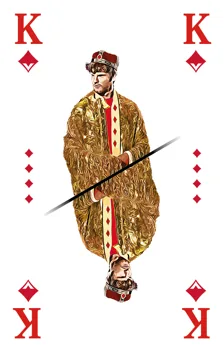 4
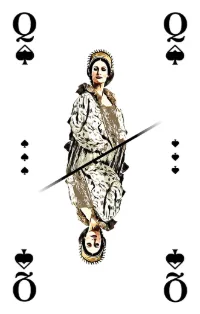 3
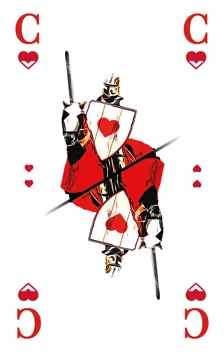 2
 2
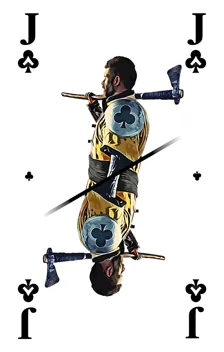 1
Every captured card counts 1. No dividing.
The count
- the base 30 cards × 1 30
- pips among them + 28
- of 94 in the deck 58
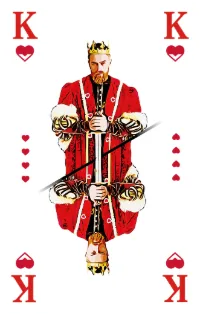
Step one gives the base count: every card is 1 Card Point, so 30 cards make a base count of 30. Step two gives the pip count: 4 apiece for the three honours and the two Kings, 3 for the Queen, 2 apiece for the two Cavaliers, 1 for the Jack and nothing for the twenty-one plain cards make 28. The base count and the pip count together are 30 + 28 = 58 of 94 Card Points. That is more than the 48 Card Points needed, so the Declarer’s side has won.
The hand was a Three with no Kontra, and 58 Card Points is below the 71 Card Points of a double game, so the contract is worth 1 Victory Point. The captured Trull was not announced and is worth 1 Victory Point more, so the Declarer and the Partner each add 2 Victory Points.
Victory Points with Simplified Scoring. every member of the winning side adds Victory Points for the contract. That is the contract’s value, multiplied by double game or Valat if made, and doubled again by each Kontra, Rekontra or Subkontra said on the contract. When the contract is lost, each of the Defenders adds the contract’s value instead, and the multipliers work the same way for them.
Every member of the side that earned a bonus adds its value, just like the contract, and failed attempts pay the other side. The double game and Valat multipliers apply to the contract alone, never to the bonuses.
The session runs in rounds of four deals (five with five players). A player, customarily one who is losing, gives notice to finish, and the session ends when the current round completes.
More for this game. Hungarian Tarokk