
The Cards
Dappen uses the full deck, all 54 cards. The ranking and the pips are the same as in Meet the Deck (see “Ranking and Card Values”, Ranking and Card Values), and no card is removed.
The Preparation
Six to eight players sit around the table, and play runs counter-clockwise.
The Dealer deals in two steps. In each step the Dealer first gives every player a batch of cards and then lays a packet of six cards face-down in the middle. With six players the two batches together give each player seven cards, and with seven players each batch is three cards. With eight players the Dealer sits the hand out and deals for the other seven. The twelve cards in the middle are the Dapp. The deal passes to the right after every hand.
| Players | Cards each | The Dapp |
|---|---|---|
| 6 | 7 | 12 |
| 7 | 6 | 12 |
| 8 | 6 | 12 |
 P1
P2
P3
P4
P5
P6
deals
The Bidding
Dappen does not use the bidding ladder from Core Concepts. Instead there are two short rounds in which each player says yes or no, starting right of the Dealer and running counter-clockwise, and in every hand someone becomes the Dapper. The Forehand has no special rights here, there is no standing, and there is no Kontra: the Challenge takes the place of both.
P1
bids 1st
P2
2nd
P3
3rd
P4
4th
P5
5th
P6
deals, bids last
Round one: Solo. Starting right of the Dealer, each player in turn says “Solo!” or “pass”. The first Solo ends the bidding at once: that player is the Dapper, plays the hand exactly as dealt and never touches the Dapp. Whoever wins the hand scores from the Solo column of the tier table, which always has the highest value. The tier table, under “Scoring the Hand”, gives the Victory Points for each range of the loser’s Card Points. There is no Challenge against a Solo. If everyone passes, round two begins.
Round two: Dapp. If nobody called Solo, the same order runs again, now for the Dapp. Each player in turn says “Dapp!” or “pass”. The first player to say “Dapp!” is the Dapper for now: once the bidding is over, they will take the twelve face-down cards in the middle into their hand and rebuild from them. Their bid does not end the bidding yet, because the players after them may still Challenge. The Challenge is explained below. In this round, two duty rules make sure the hand gets played. Both duties apply only until somebody says “Dapp!”. After that, nobody has to bid or challenge, whatever their cards.
The trump-stop duty. You may not pass while holding a trump stop. If you hold one, you must say “Dapp!”. A trump stop is the Skus by itself, the XXI with at least one other Tarok, the XX with at least two other Taroks, or the XIX with at least three other Taroks. The ladder of trump stops goes on in the same way, with one more Tarok for each step down.
The second-to-last duty. If everyone before you has passed and you are the second-to-last player to speak, the Dapp is yours automatically, whatever your cards: you are drafted. The final speaker is never drafted.
A Dapper drafted by the second-to-last duty cannot be Challenged. Only that duty shields a Dapper from the Challenge: a Dapp forced by a trump stop counts as voluntary, because the other players cannot see that it was forced.
The Challenge. After a voluntary Dapp bid, each player who speaks after the bidder, in counter-clockwise order, may call “Challenge!”. The bidder chooses: “Go ahead” hands the Dapp to the Challenger, “I’ll keep it” holds it. Either way, the first Challenge ends the bidding on the spot: there are no second Challenges, not even after “Go ahead”. A Challenge doubles the hand’s tier payout (the Dapp column, times two), whether the bidder keeps the Dapp or hands it over. The Ultimos keep their own values; they are never doubled.
The Contracts
The contracts in these rules are a basic set, based on the game as it is played in Furtwangen. No two groups play Dappen exactly alike, and you are meant to build on this set. The Expansions list rules from the Black Forest villages. The village versions have a page of their own, and the beginner score sheet has blank lines for the bids you want to add.
| Contract | VP | Leads | Dapp |
|---|---|---|---|
| Dapp | 1 to 8 | Dapper | all 12 |
| You rebuild your hand from the Dapp, then play alone against all the other players. A Dapp is paid from the Dapp column of the tier table. | |||
| Dapp + Challenge | 2 to 16 | Dapper | all 12 |
| You play the same contract as the Dapp, and the Challenge doubles its payout from the Dapp column of the tier table. | |||
| Solo | 3 to 17 | Dapper | 0 |
| You play alone against all the other players with the hand as dealt, and the Dapp joins your pile at the end. A Solo is paid from the Solo column of the tier table. | |||
Should you claim it?
Look at the small hand you were dealt, and keep in mind that the Dapp may give you twelve more cards to rebuild it from. This section helps you decide whether to play alone against all the other players.
You count twice here: once roughly before you claim, and once properly after the exchange, when you can see the twelve new cards.
Call “Solo!” if you hold. three or more Taroks from the XV up already. In a Solo you play the hand exactly as dealt against all the other players.
Claim the Dapp if you hold. enough Taroks worth rebuilding around, aiming to discard every card of a suit or two and land on about 3 Taroks from the XV up plus discards with many pips once the new cards settle. Your discards still count toward your pile.
A lone King. in Dappen, do not count a lone King as a trick. With five or six opponents, somebody is almost always out of its suit the first time it is led, and the King gets trumped. Count only your Taroks from the XV up.
(With a trump stop on the ladder, the trump-stop duty can force you to bid, and that is also the hand worth claiming voluntarily, because the twelve-card exchange rebuilds the hand around the trump stop; without a trump stop, pass. A Solo forgoes the exchange, so it needs a hand that can win with no rebuild at all, and in practice that means three or more Taroks from the XV up. Both numbers, the three or more Taroks from the XV up for a Solo and the target of about three after the exchange, are our own rule of thumb.)
The Exchange
The Dapper takes all twelve Dapp cards into their hand. Eight players use the seven-player row, since the Dealer sits out. Count along:
| Players | Dealt | Dapp | In hand | Keep | Discard |
|---|---|---|---|---|---|
| 6 | 7 | 12 | 19 | 7 | 12 |
| 7 | 6 | 12 | 18 | 6 | 12 |
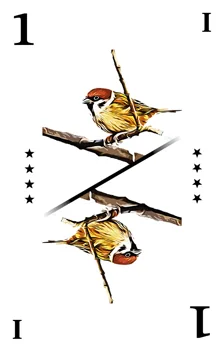
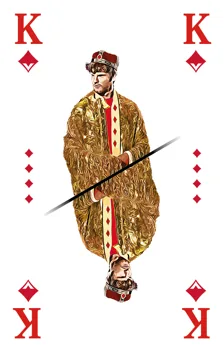
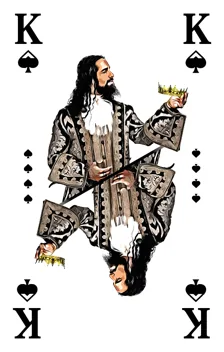
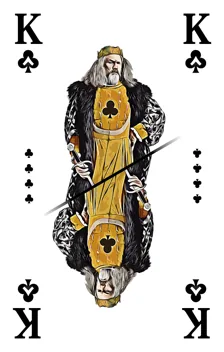
You choose which cards to keep and lay the discards face-down in front of you, and you return to your dealt hand size. One law limits the discards: you may never discard one of the three Trull cards or one of the four Kings. Only these seven cards carry 4 pips on the Alpine Tarok deck. The discards are not lost: they stay hidden in front of the Dapper and count toward the Dapper’s own pile at the end, pips and all.
The instant win. If, once the Dapp is picked up and before anything is discarded, the Dapper holds the full Trull and all four Kings, they show these seven cards, win on the spot and score 8 Victory Points, or 16 Victory Points if there was a Challenge. No trick is played.



Bonuses and Announcements
The Ultimos
In Dappen the bonuses are the Ultimos. After the exchange and before the first trick, the Dapper may lay one or more of the Taroks Pagat, II or III face-up on the table. Each card laid face-up is a promise that this card will win one of the last three tricks. In Furtwangen these promises are called Ultis.
A declared Ultimo card stays visible and may not be played before its promised trick unless no legal card remains. If the Dapper has to play a declared Ultimo card before its promised trick, that Ultimo has failed, and each opponent adds its Victory Points. Each Ultimo is scored on its own, on top of the hand’s result. Bonuses are scored regardless of who won the contract.
| Ultimo | The promise | Success | Failure |
|---|---|---|---|
| III Ultimo | The III wins the third-to-last trick. | The Dapper adds 2 Victory Points. | Each opponent adds 2 Victory Points. |
| II Ultimo | The II wins the second-to-last trick. | The Dapper adds 4 Victory Points. | Each opponent adds 4 Victory Points. |
| Pagat Ultimo | The Pagat wins the very last trick. | The Dapper adds 6 Victory Points. | Each opponent adds 6 Victory Points. |
Playing the Hand
The Dapper leads the first trick; afterwards the winner of each trick leads, counter-clockwise. The opponents gather their tricks into one shared team pile.
Scoring the Hand
If the contract scores from the value of the tricks rather than the number of tricks, this is how you count Card Points (see Scoring in Core Concepts). The Dapper counts their pile (tricks, discards and, after a Solo, the untouched Dapp), and the team counts its shared pile. If the Dapper wins no trick at all, the Dapp goes to the team instead, and the Dapper counts zero Card Points. In a Dapp contract this means the twelve discards go to the team as well. You count in three steps:
- Step one: count your captured cards.
- Step two: divide by two and round down. That is your base count. (An odd card adds nothing here; its pips still count in step three.)
- Step three: add the pips. That is your pip count, and together the two counts are your Card Points. These pips sit on the sides of the face cards and the Trull cards of the Alpine Tarok deck.
The team wins at 40 Card Points. At 39 Card Points or fewer, the Dapper has won the hand.
Then you read the tier table below, always from the loser’s Card Points. This is Simplified Scoring: the winners add, nobody subtracts.
If the Dapper wins, the Dapper adds the tier value (read from the team’s Card Points). If the team wins, each opponent adds the tier value (read from the Dapper’s Card Points). A Solo is scored from the Solo column whoever wins it; the native tables on the Traditional Scoring Tables page pay a lost Solo at half, and these rules keep one column, for simplicity.
The first player to reach 60 Victory Points wins. If several players cross 60 Victory Points in the same hand, the highest total wins.
How to count
The cards that leave the count
The pip carriers
4
 1
4
 1
4
4
4
 2
 1
Count the cards, then divide by two and round down.
The count
- the base 24 cards, 2 12
- pips among them + 25
- of 79 in the deck 37
The tier table gives the Victory Points that each winner adds.
| The loser’s Card Points | Dapp | Dapp + Challenge | Solo |
|---|---|---|---|
| 33–39 | +1 VP | +2 VP | +3 VP |
| 28–32 | +2 VP | +4 VP | +5 VP |
| 23–27 | +3 VP | +6 VP | +7 VP |
| 18–22 | +4 VP | +8 VP | +9 VP |
| 13–17 | +5 VP | +10 VP | +11 VP |
| 8–12 | +6 VP | +12 VP | +13 VP |
| 3–7 | +7 VP | +14 VP | +15 VP |
| 0–2 | +8 VP | +16 VP | +17 VP |
More for this game. Dappen